
Increasing car loan expenses: what’s driving higher monthly payments in the U.S.?
Even though some interest rates are dropping, car loan payments continue to climb. Discover the factors behind these rising costs and find out how you can reduce your auto financing bills.
Why a growing number of Americans are struggling to keep up with car payments
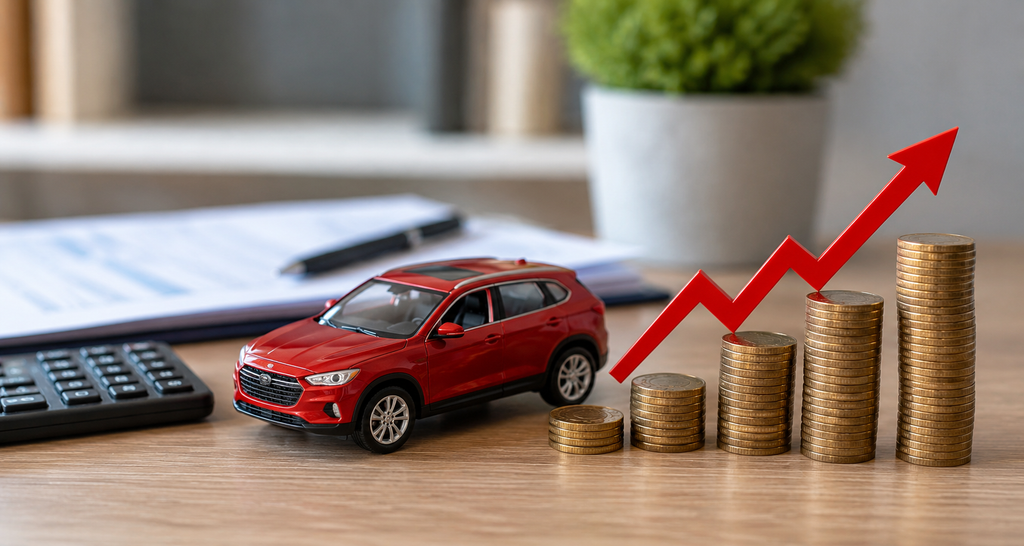
If your monthly car payment seems significantly higher than before, it’s not just your imagination.
There’s a key point to understand: your monthly payment can increase even if interest rates on car loans stay the same.
Factors like rising vehicle prices, bigger loan amounts, smaller down payments, carrying negative equity from your last car, and extending the loan term can all boost your monthly bills.
Here’s the real reason behind the rising costs of car financing in 2026.
What’s Causing Car Loan Payments to Rise?
Car loan payments are climbing mainly because buyers are taking out larger loans to afford their vehicles.
Meanwhile, interest rates are still much higher than the low rates that consumers experienced before and early in the pandemic.
According to Experian’s report for Q2 2026:
These figures illustrate why focusing just on the interest rate can be deceptive.
In fact, the average interest rate on new cars dropped from 6.79% to 6.35% year over year, yet monthly payments rose by $16.
The reason? Buyers are financing larger loan amounts.
This difference is crucial when evaluating if a car payment is truly affordable.
Rising vehicle prices lead to bigger loans
In July 2026, Kelley Blue Book reported the average price paid for a new vehicle was $49,855.
This figure is 1.9% above the previous year and marks the highest average so far in 2026.
Even a modest rise in the vehicle’s price can have a significant impact when the cost is spread out over multiple years of financing.
For instance, taking on an extra $3,000 loan doesn’t just add $3,000 in payments — interest accumulates on that higher principal as well.
This doesn’t even include additional expenses like taxes, fees, dealer extras, or other charges that might be included in the loan amount.
Longer loan terms can conceal the true expense
One simple way to make monthly car payments seem more affordable is by stretching out the loan term.
Loans lasting 72 or 84 months can lower monthly payments compared to 48- or 60-month loans, but they usually mean paying interest for a longer time.
According to NerdWallet, the average new-car loan in Q1 2026 had a term of about 69.5 months, while used-car loans averaged roughly 67.7 months.
This shows that most borrowers are financing their vehicles for nearly six years already.
While the monthly payment might seem affordable now, the overall amount paid can be much greater.
How your credit score can significantly affect your payment
The rate advertised online often isn’t the same as what you’ll actually qualify for.
For instance, Bankrate’s national auto-loan index calculates rates based on a specific borrower profile—like a 700 FICO score, a set loan amount, and a particular down payment.
NerdWallet’s August 2026 data reveals notable variations in average rates depending on the borrower’s credit profile and other factors.
According to its report, average rates in July 2026 were about 7% for new cars and 10.6% for used cars per Edmunds, with Cox Automotive’s Dealertrack data indicating even steeper average rates.
If your credit rating falls below prime, the interest rate you qualify for could be much higher than the advertised headline rates.
What Factors Are Driving Car Financing Costs in 2026?
Multiple factors are simultaneously making car loans less affordable.
Vehicle prices continue to hover near $50,000
With the average new car now priced near $50,000, the financial commitment looks very different compared to what many Americans faced a decade ago.
Kelley Blue Book’s data from July shows the average price for a new vehicle at $49,855.
This elevated base price impacts all the factors that follow:
- the amount financed;
- the monthly payment;
- the interest paid;
- the required down payment;
- the amount of income needed to comfortably afford the vehicle.
That’s why zeroing in solely on APR can sometimes mislead your decision-making.
Interest rates continue to play a key role in the overall cost
According to Bankrate’s data from August 26, the average interest rate for a 60-month new-car loan was 6.94%, while a 48-month used-car loan averaged 7.43%.
These rates are below some of the highest levels seen in recent years, yet they remain substantial enough to significantly impact the overall price paid for a vehicle.
Borrowers financing used cars often face an even tougher situation.
Experian’s Q2 2026 report showed the average interest rate for used-car loans was 11.19%, slightly down from 11.57% the previous year.
Borrowers with lower credit scores often face even higher APRs than the average rates.
How the Federal Reserve influences, but doesn’t set, your auto loan rate
Many believe a Federal Reserve rate cut will instantly lower car payments, but that’s not the case.
Since most auto loans have fixed interest rates, existing borrowers usually won’t see changes to their monthly payments when the Fed adjusts its benchmark rate.
That said, the Fed’s policies shape overall lending conditions and can influence the interest rates lenders offer on new auto loans.
That’s why it’s important for consumers to understand the difference between the Fed’s policy rate and the APR on their individual auto loans.
What Are Americans Paying for Cars in 2026?
Recent data from Experian highlights just how costly financing has become for the typical car buyer.
Payments on new cars
In Q2 2026, the typical new-car monthly payment rose to $765, up from $749 the previous year.
NerdWallet’s Q1 figures indicated a similar monthly payment, around $770.
Payments for used cars
While used cars cost less to finance overall, that doesn’t always mean the payments are affordable.
In Q2 2026, Experian found the average monthly payment for used cars was $542, up from $532 the year before.
The average APR for used-car loans stood at 11.19%.
Is August 2026 a Smart Month to Purchase a Vehicle?
August might present some good deals for certain buyers. However, a discount alone doesn’t guarantee that financing the purchase will be cost-effective.
How Model-Year Updates Create Buying Chances
Dealerships are starting to stock 2027 model-year vehicles, but the rollout is happening more slowly compared to last year.
According to Kelley Blue Book, 2027 models made up just 5.6% of inventory in July, a much slower pace than what was seen the previous year.
This means buyers might see discounts on leftover 2026 models, though the deals can differ widely depending on the vehicle.
Labor Day sales often bring special financing offers
With Labor Day on September 7, 2026, the end of August becomes a key time for car buyers.
Cox Automotive projects that August sales will hold steady at about a 16.3 million seasonally adjusted annual rate.
Still, the raw number of August sales is predicted to drop compared to last year, mainly due to calendar factors.
Automakers are also offering incentives to help boost sales.
J.D. Power’s August forecast showed that average incentives per vehicle were rising to about $3,384, a 5.9% increase from last year.
Still, buyers should focus on the overall financing cost instead of just the upfront rebate.
A $3,000 rebate with a high interest rate might not be better than a smaller rebate combined with a much lower APR.
How Does the New Auto Loan Interest Tax Deduction Work?
One notable update for car buyers in the U.S. is the federal tax deduction available for interest paid on certain new auto loans.
Still, this tax break shouldn’t be used as justification for borrowing more than you can afford.
Keep in mind that a tax deduction doesn’t reduce the actual interest you have to pay your lender.
According to Jonathan Smoke, Chief Economist at Cox Automotive, speaking to CNBC, the expected tax benefit on a typical new auto loan would likely be modest — around $500 or less during the first year, depending on individual tax situations.
In short: don’t justify spending an extra $5,000 on a car simply because you might get a tax break on the loan’s interest.
Will Car Loan Payments Become More Affordable?
It’s uncertain. The latest figures present a somewhat conflicting outlook.
For instance, some auto-loan interest rates have dropped. Experian noted year-over-year decreases in average rates for both new and used cars.
Conversely, vehicle prices are still high, and the typical loan amount keeps rising.
Cox Automotive reported that the estimated average auto loan rate in July stood at 9.52%.
New-vehicle affordability stayed mostly steady as income gains and stable interest rates balanced out the slightly higher car prices.
This means buyers shouldn’t plan their budgets expecting interest rates to drop enough to make today’s pricey vehicles truly affordable.
Key Factors to Review Before Finalizing an Auto Loan
Make sure to verify these details before you agree to a loan:
- 1. APR
- 2. Amount financed
- 3. Loan term
- 4. Total interest
- 5. Trade-in balance
- 6. Add-ons
- 7. Total ownership cost
Author’s Perspective
One of the biggest pitfalls for car buyers in 2026 is concentrating on the monthly payment instead of the overall price of the vehicle.
A monthly payment of $600 may seem appealing while you’re at the dealership.
However, that figure might come with an 84-month loan, a minimal down payment, and a hefty balance carried over from your trade-in.
This is especially crucial now, since the average car price remains close to $50,000 in today’s market.
At the same time, August 2026 gives buyers a solid reason to approach car shopping with care.
Changes in model years, manufacturer deals, and Labor Day specials can all present real buying opportunities.
However, the best bargain isn’t always the one with the largest rebate or the lowest monthly payment advertised.
While a smaller monthly payment helps, the overall lower cost is what really matters.
Recommended Content
More expensive car insurance
Learn what’s driving U.S. premiums in 2026 and what you can do to lower your auto insurance costs.
Continue reading * You will remain on the current website