
Mortgage rates climb past 7% again: essential steps for homebuyers today
Mortgage rates have climbed back over 7%. Learn the reasons behind this increase, understand the extra costs involved, and find out what steps homebuyers should take today.
Mortgage rates continue to rise: homebuyers face higher costs
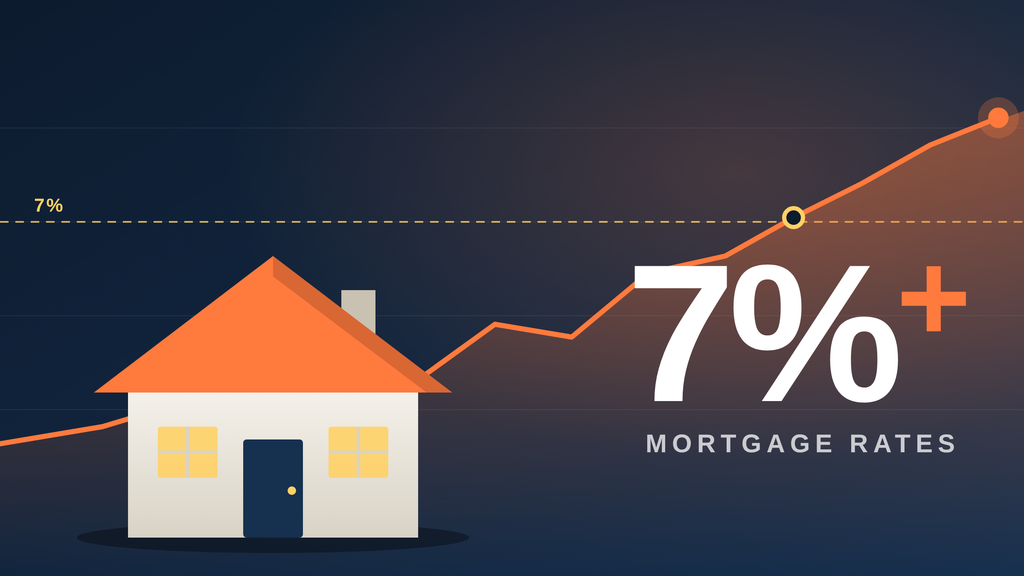
Mortgage rates are climbing once more, causing homebuyers nationwide to encounter increased expenses on their journey to owning a home.
In October 2026, the average 30-year fixed mortgage rate hit 7.40%, raising the cost of home loans for families already challenged by affordability issues.
With home prices still elevated and inflation continuing to strain household finances, rising borrowing costs are pushing monthly mortgage payments beyond many buyers’ comfort zones.
Even those with steady incomes and strong credit may discover they qualify for smaller loan amounts than anticipated.
Knowing why mortgage rates are climbing, how much extra you might pay, and the steps to take before applying can help you steer clear of expensive mistakes.
Before submitting an offer on a home, here’s what every buyer should understand and prepare for today.
What’s Driving Mortgage Rates Back Above 7%?
Mortgage rates have surpassed 7% once more due to a mix of inflation worries, shifts in the bond market, and doubts about the future economic outlook.
Freddie Mac reports that the average rate for a 30-year fixed mortgage hit 7.40% on October 8, 2026.
By October 29, the rate had dropped slightly to 7.24% but still stayed above the 7% mark.
This is important because mortgage rates affect both how much buyers qualify to borrow and what portion of their income is spent on housing payments.
The rise in rates can be attributed to several economic elements.
How Inflation and Treasury Yields Affect Mortgage Rates
Inflation plays a major role in determining the cost of borrowing over the long term.
In September 2026, the Consumer Price Index (CPI) rose by 0.6% compared to the previous month, while the annual inflation rate hit 3.7%, according to data from the U.S. Bureau of Labor Statistics.
Energy costs were a key driver of this rise, with gasoline prices jumping 9.1% throughout the month.
Increased energy expenses can impact transportation, household budgets, and shape wider inflation expectations.
If investors worry that inflation will stay high, they tend to seek higher returns on long-term investments.
A key reference point in this context is the 10-year U.S. Treasury yield.
Mortgage rates don’t move directly with this yield, but both are shaped by expectations about inflation, economic growth, and where interest rates are headed.
How the Federal Reserve’s Actions Impact Homebuyers
Monetary policy moves by the Federal Reserve often shape market expectations across the financial landscape.
Still, these decisions don’t directly set mortgage interest rates.
On October 28, 2026, the Federal Open Market Committee (FOMC) chose to keep the federal funds rate target range steady at 3.75% to 4.00%.
The Federal Reserve also noted that inflation levels remain high.
For homebuyers, it’s key to understand that the federal funds rate mainly impacts short-term borrowing costs.
On the other hand, 30-year mortgage rates are influenced by expectations in the long-term market.
This explains why a cut in the Fed’s rate doesn’t necessarily mean lower mortgage costs.
Rather than depending solely on central bank updates, buyers should track Freddie Mac’s weekly mortgage rate data and seek fresh quotes from lenders.
The Effects of Rising Mortgage Rates on Homebuyers
An increase in mortgage rates might seem minor when viewed as a simple percentage change.
Yet, over the course of a 30-year loan, even a one-point rise in the rate can drastically affect the total amount paid by borrowers.
This effect is particularly significant for those borrowing larger sums.
Why Affordability Challenges in Housing Are Increasing
Rising borrowing expenses are just one piece of the challenge.
In addition, both the high home prices and the scarcity of available listings affect the total amount buyers must pay.
Data from the National Association of REALTORS® (NAR) shows the median price for existing homes hit $417,500 in September 2026.
This marked a 1.3% rise compared to the same month in 2025.
Sales of existing homes grew 1.5% from the previous month but were still 2.2% lower than a year earlier.
There were about 1.60 million homes available, which translates to roughly 4.8 months’ worth of inventory.
This situation poses challenges for buyers who rely on financing.
Even if a home’s listing price feels within reach, a rise in mortgage rates can boost monthly payments enough to push the purchase beyond a buyer’s budget.
For those buying their first home, this might result in:
- Delaying the decision to buy a home.
- Opting for smaller living spaces.
- Exploring more affordable neighborhoods.
- Building savings for a bigger down payment.
For homeowners currently considering a move, rising rates can make it tougher to justify swapping an existing mortgage for a costlier new loan.
Steps Homebuyers Should Take When Mortgage Rates Rise Above 7%
Mortgage rates exceeding 7% don’t mean that every buyer must put their home search on hold.
That said, buying a home now demands more thorough financial planning than before.
Instead of just looking at the headline interest rate, buyers should consider the overall expenses involved in financing.
Consider these practical actions before you finalize your mortgage contract.
Shop Around: Compare Offers from Multiple Mortgage Lenders
A key step is to gather mortgage quotes from a variety of financial institutions.
Mortgage lenders, credit unions, and banks often present different interest rates, fees, and loan terms—even for borrowers with similar credit profiles.
The Consumer Financial Protection Bureau (CFPB) advises that comparing Loan Estimates enables buyers to spot key differences and negotiate more favorable terms.
The CFPB also notes that lenders are typically required to provide a Loan Estimate within three business days after receiving the six essential pieces of information needed for a loan application.
When selecting a lender, be sure to compare the following:
- Interest rate: The percentage charged on the borrowed amount.
- APR (Annual Percentage Rate): A broader measure of borrowing costs that includes the interest rate and certain loan-related charges.
- Loan term: Whether the mortgage lasts 15, 20, or 30 years.
- Closing costs: Fees required to complete the transaction.
- Discount points: Upfront payments that may reduce the interest rate.
- Monthly payment: The amount due each month, considering the costs included in the estimate.
An advertised lower interest rate doesn’t always translate to a better mortgage deal.
For instance, one lender might offer a lower rate but require higher upfront fees or closing costs.
Another lender might charge a slightly higher interest rate but require fewer upfront fees.
The key is to evaluate the overall cost, not just the initial interest rate.
Boost Your Credit Score Before Applying
Your credit rating plays a crucial role in determining the mortgage rates and loan conditions you’ll qualify for.
Lenders typically review credit data to estimate the likelihood of timely loan repayment.
Having a stronger credit history can boost your likelihood of securing better loan terms.
Consider these actions before submitting your mortgage application:
- Verify your credit reports for any errors.
- Make timely payments and avoid late fees.
- Lower your credit card balances as much as you can.
- Refrain from opening multiple new credit accounts before applying.
- Assess your current debts and monthly expenses carefully.
It’s also crucial to know that mortgage credit score requirements vary and aren’t the same across all loans.
Different programs like conventional, FHA, and VA loans each have their own qualifying criteria.
Buyers should inquire with lenders about which credit scoring models and criteria are used for the mortgage products they’re interested in.
Building a stronger credit profile might take some time, but it can improve your leverage when seeking mortgage financing.
Think About Making a Bigger Down Payment
Putting down more money upfront can lower the total loan amount you need to take out.
This often results in a reduced monthly payment for principal and interest.
For instance, buying a home priced at $400,000 involves:
- 10% down payment: $40,000, leaving a $360,000 loan.
- 20% down payment: $80,000, leaving a $320,000 loan.
Reducing the loan amount can significantly impact monthly payments, especially when rates are above 7%.
Making a larger down payment might also enable some conventional borrowers to skip private mortgage insurance (PMI), which lenders typically require if the loan-to-value ratio exceeds 80%, depending on specific loan guidelines.
That said, increasing your down payment isn’t always the smartest choice.
Buyers should refrain from depleting all their savings to lower the mortgage loan amount.
It’s crucial to keep an emergency fund intact, especially to cover unexpected repairs, rising insurance costs, or other household expenses.
A responsible down payment should help make monthly mortgage payments affordable without compromising the buyer’s financial security.
Understanding Rate Locks and Mortgage Points
When mortgage rates fluctuate often, buyers might want to lock in a rate before closing to protect themselves.
A mortgage rate lock is a commitment that shields the borrower from rising interest rates for a set time, as long as the loan closes within that period and the application remains unchanged in ways that affect the lock.
Per the CFPB, rate locks typically last 30, 45, or 60 days, though some lenders may offer longer durations.
Be sure to ask your lender these questions before agreeing to a rate lock:
- How long will the rate remain locked?
- Is there a fee to lock the rate?
- What happens if closing is delayed?
- Can the rate be adjusted if market rates fall?
- How much would an extension cost?
Another strategy to consider is buying mortgage discount points.
These are fees paid upfront to the lender in return for securing a lower interest rate.
Still, the actual savings depend on how much the rate is reduced and the length of time the mortgage is held.
For instance, if a buyer expects to sell or refinance within a few years, they might not recoup the upfront cost of buying discount points.
Be sure to weigh the upfront expense against the potential long-term benefits before deciding to buy points.
Author’s Perspective
Mortgage rates climbing back above 7% serve as a crucial alert for anyone considering buying a home in the U.S.
However, the biggest error homebuyers make is reacting to headlines without carefully reviewing their personal financial circumstances.
Remember, a mortgage is a long-term commitment, and the interest rate is just one factor to consider in your decision.
Costs like property taxes, homeowners insurance, upkeep, HOA fees, closing expenses, and maintaining emergency funds all warrant careful attention before finalizing a loan.
With the average 30-year fixed mortgage rate at 7.40% and the median price of existing homes around $417,500, buyers are facing a tough affordability landscape.
Here’s my straightforward advice: don’t let worries about rising rates push you into a mortgage that stretches your budget too thin.
Make sure to shop around with several lenders, know all associated fees, and work out your monthly housing costs before committing to an offer.
The ideal moment to buy a home isn’t always when mortgage rates hit their lowest point.
It’s when the purchase aligns with your financial situation and lets you stay secure after moving in.
Recommended content
Why savings rates may finally climb again
Learn what the Fed’s decisions mean for your money and how to compare high-yield savings accounts.
Continue Reading * You will remain on the current website